




Easy-to-sing enka: A roundup of recommended enka songs for karaoke

Enka, a genre that represents Japanese music.
Its singing method uses a technique called kobushi, which is highly distinctive, and its unique sound—built on pentatonic scales and triads—has been loved for many years.
That said, because enka relies on kobushi, many people may feel it’s difficult to sing.
For those people, we’ve selected songs that minimize the use of kobushi and don’t require a wide vocal range.
We also cover the technical aspects in detail, so if you want to sing enka well, this is a must-read!
- Even karaoke beginners can relax! Easy-to-sing songs for men
- [Karaoke] A roundup of songs that are easy for women to sing!
- Classic enka songs you’ll want to sing at karaoke: recommended popular tracks
- A must-see for low-voiced women! Popular songs that are easy to sing at karaoke
- Karaoke songs easy to sing for men in their 60s, even for those who aren’t good at singing
- Karaoke songs recommended for men with low voices or who are good at singing in a low register
- [For Women] A roundup of enka songs that can score high in karaoke
- Enka Singers Most Popular at Karaoke [2025]
- Easy songs that are simple to sing at karaoke. Recommended classics and popular tracks.
- [For women] Songs with a narrow vocal range that are easy to adjust the key for!
- Karaoke songs that are easy to sing even if you’re not confident in your pitch (for women in their 50s)
- No worries if you're tone-deaf! Easy-to-sing J-pop songs for karaoke
- [In Their 50s] Ranking of Easy-to-Sing Karaoke Songs [2025]
Easy-to-sing enka: A roundup of recommended enka for karaoke (31–40)
Rainy PierTadashi Mikado

Tadashi Mikado, an enka singer who rose to popularity after leaving his salaried job.
He’s an enka singer from Kishiwada in Osaka, and despite his gallant appearance, his gently enveloping vocal timbre is striking.
Among his songs, the one I especially recommend is Amaguru Hatoba (Rainy Wharf).
While this piece is undoubtedly a solid, traditional enka number, the kobushi (ornamental vibrato) only appears in sections where it’s easy to execute.
The tempo is quite slow as well, so if you can manage basic kobushi, you should be able to aim for a high score.
Izakaya HotaruKaori Uesugi

Kaori Uesugi, a female enka singer also known as a member of the Rainbow Usagi-gumi, enjoys idol-like popularity while possessing solid vocal ability, with a style reminiscent of Kaori Kozai.
Among her songs, the one I especially recommend is Izakaya Hotaru.
The vocal range is fairly wide, but the tempo is slow and the kobushi ornamentation is relatively easy.
However, be careful at the end of the chorus, where there are about three consecutive kobushi turns.
night skyHiroshi Itsuki
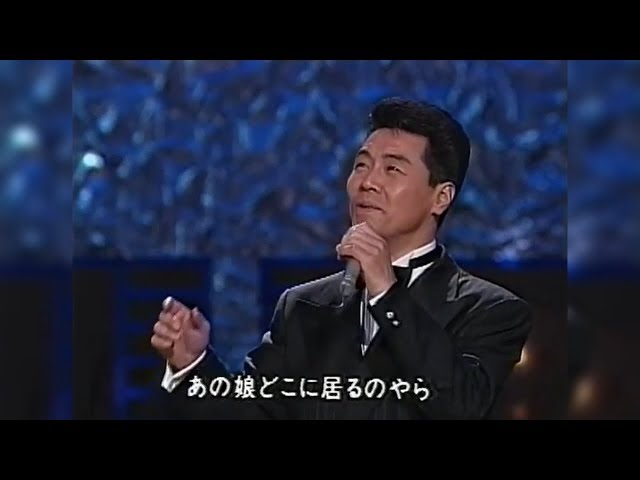
Hiroshi Itsuki is a giant in the enka world.
Even with his deliberately constricted singing style, the solid depth of his voice is truly overwhelming.
Among his songs, the one I especially recommend is Yozora (Night Sky).
While it has a somewhat wide vocal range, it features relatively few kobushi (ornamental turns) for an enka piece, making it very approachable for those who struggle with them.
If the high notes are too difficult, try lowering the key and give it a shot.
Blues of a woman like thisAkio Kayama

Akio Kayama, the enka singer known for classics like “Hisame,” may not be a virtuoso showman, but his faithful-to-the-score singing and dandy vocal tone have won him many fans.
Among his songs, the one I especially recommend is “Konna Onna no Blues.” While it’s categorized as enka, it leans strongly toward kayōkyoku (Japanese pop of the Showa era) throughout, so there are no difficult kobushi (ornamental vocal turns).
The range is narrow too, so give it a try and sing along.
Fragments of Men and WomenKiyoshi Maekawa

Singer Kiyoshi Maekawa has gained popularity for his rich vocal tone and steady singing.
While many may associate him more with kayōkyoku (Japanese popular songs) than with enka, he does perform solid, ornamented enka depending on the song.
Among his enka pieces, one I particularly recommend is “Otoko to Onna no Kakera” (Shards of Man and Woman).
It features very few kobushi (traditional vocal turns), appearing only once in the verse and twice in the chorus.
Because it’s an enka number with a very strong kayōkyoku flavor, it’s quite easy to sing.
Easy-to-sing enka: A roundup of recommended enka for karaoke (41–50)
I fell in love with Yuko like that.Masuiyama Daishiro

Taijiro Masuiyama is an enka singer with the unusual background of being a former professional sumo wrestler.
People have long said that sumo wrestlers have good voices, and he is a perfect example.
His voice is warm and gentle, yet possesses overwhelming richness.
The song he performs here, “Sonna Yūko ni Horemashita,” fully showcases the essential elements of enka while still being very easy to sing.
There are few kobushi (ornamental turns), and the ones that do appear are simple—just one or two turns—so it should be possible to aim for a high score.
Your path of gloryYoshimi Tendo

Yoshimi Tendo, the songstress born in Osaka.
She possesses a vocal power unimaginable from her petite frame, and armed with outstanding kobushi ornamentation and expressive ability, she has produced numerous masterpieces.
Among her songs, the one I especially recommend is “Anta no Hanamichi.” Compared to her other tracks, it uses fewer kobushi, so it’s relatively easy to sing.
Even so, there are a few tricky parts; if you find them too difficult, try ignoring the kobushi and just sing through.