




![[2025] Handle With Care! Recommended Depressive Black Metal Bands Summary](https://i.ytimg.com/vi_webp/iP_lCU2Sz50/maxresdefault.webp)
[2025] Handle With Care! Recommended Depressive Black Metal Bands Summary

In recent years—partly due to the influence of the film “Lords of Chaos”—it feels like more music fans have at least heard the term “black metal.” But are you familiar with the genre commonly known as “depressive black metal”?
This article introduces some of the most notable bands in depressive black metal—often abbreviated as DSBM overseas—a subgenre derived from black metal that is intensely introspective and decidedly world-weary.
Even among black metal fans, many find DSBM difficult to enjoy.
It’s a highly selective genre, so please approach it with due caution!
[2025] Handle with Care! A Curated List of Recommended Depressive Black Metal Bands (1–10)
Poslední cestaTrist

A charismatic figure in depressive black metal born out of the Czech scene, Trist runs a self-titled project; many consider him and Sweden’s Hypothermia to be the very symbols of DSBM.
Early Trist played primitive black metal—you can hear this clearly on the demo tape Do Tmy Zalu I Nicoty—but it’s no exaggeration to say that Trist as a so-called depressive black metal act truly began with the 2006 debut album Stíny.
There’s no exhilarating sense of speed whatsoever; the songs center on mid-tempo, and the sound quality—rather than being raw and ferocious—borders on cheap, giving it the feel of true basement music.
Guitars spew a sandpapery hiss of noise, drums occasionally pound out double bass, and vocals sound like madness rising from the pit of darkness.
It’s a realm so bleak that the word “gloomy” starts to feel cute by comparison; a newcomer would likely give up within minutes.
That said, if you listen closely, even within the sheer desolation there are fleeting moments when the guitar riffs hint at melody, and the roaring wall of sound can even verge on shoegaze.
Perhaps that’s precisely why it lures the listener ever deeper into a bottomless well of despair and sorrow.
IsolationHypothermia

Hypothermia is a Swedish black metal band led by Kim Carlsson, also known for his work with Life Is Pain and Lifelover.
Since forming in 2001, they had been releasing material actively, but as of 2024, it appears there have been no new releases since the 2017 album Kaffe & Blod II.
True to a band name meaning “hypothermia,” their frigid riffs and vocals that wail like screams from the depths of a basement repeat endlessly across songs that routinely exceed 20 minutes—pure, forbidden darkness.
Coupled with the harsh, lo-fi production, there isn’t a single ray of light—only crushing, profound despair that eats away at the listener’s mind and body.
It’s dangerously intense music; the odds that someone new to this kind of sound will make it to the end are vanishingly small.
While quintessentially depressive black metal, Hypothermia might be the band you should listen to last if you’re just getting into the genre.
The beginningHappy Days

Anyway, the impact of a band name as dripping with irony as “Happy Days” is something else.
If only they actually played positive, happy music—but their sound world feels like it’s about to bid farewell to the world in utter despair, far removed from any “happy days,” and really ought to come with a handling warning.
Formed in 2004, they’re an American depressive black metal band whose sound is the very definition of DSBM orthodoxy, making them highly popular among aficionados.
Their 2008 debut album, Melancholic Memories, is—true to its title—the apex of melancholia.
The opening track, Drowning In Razorblades, begins with an unbearably sorrowful piano and a spoken monologue like a final testament, already deeply unsettling; the next track, The beginning, with its blackgaze-like noise and screams of despair, will sweep you away completely.
From the third track, Neglect.
.
.
, onward, every piece runs over ten minutes, and the album even includes a Trist cover at the end, offering a glimpse into their musical roots—fascinating stuff.
They’re still active in the 2020s, and in 2023 they released the album En Enfer, J’ai Régné, asserting their continued presence with a thoroughly melancholic sound steeped in darkness and despair.
Det Hviskes Blant Sorte VinderStrid

Alongside Norway’s Burzum, a group that can be considered a true origin point of depressive black metal is Strid, another legendary Norwegian black metal band.
Formed in 1993 around Storm, who took his own life in 2001, they released the demo End of Life in 1993 and a self-titled EP the following year.
In 2007, they put out a compilation that included those releases along with recordings from their predecessor band; with just that one disc, you can cover almost their entire output—so few recordings, yet enough to become the stuff of legend.
From the perspective of depressive black metal, their 1994 self-titled EP is regarded as crucial.
Its sound, which shares black ambient elements reminiscent of early Burzum, is relentlessly dark, and the vocals—howled from within solitude and despair—can even inspire fear.
Musically, it’s marked by the hallmarks of primitive black metal: noisy guitars, a bass line that carries the melody, and understated, steady drumming.
Listeners who crave dynamic shifts might find it a bit austere, but you’ll be amazed that this sound existed already in the early ’90s.
I hope you’ll get to know this facet of ’90s Norwegian black metal—distinct from better-known bands like Mayhem, Emperor, and Satyricon.
Death – Pierce meSilencer
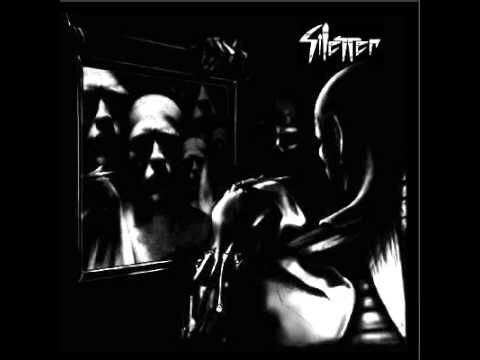
When discussing the formation of the depressive black metal genre, the presence of the Swedish black metal band Silencer is indispensable.
Initially started as the solo project of Andreas Casado, who had also been active as a member of Shining, Silencer brought in a vocalist named Nattramn and released Death – Pierce Me in 2001.
This album was both their first and last work, which is why their name became legendary within the underground black metal scene.
The title track and opening number, Death – Pierce Me, begins with a wistful acoustic guitar—an intro that feels melancholic yet even beautiful—but around the 1:40 mark, Nattramn suddenly unleashes a scream of madness, a turn so startling it may even inspire fear in the listener.
Within the depressive black metal sphere, the production is relatively clear, the band dynamics ebb and flow, and, as mentioned, the melancholic elements are strong.
Including the instrumental track at the end, the album as a whole is dramatically constructed, and Andreas clearly shows talent as both songwriter and arranger.
But above all, Nattramn’s vocals are overwhelmingly shocking.
Listening to Silencer’s music will likely become an unforgettable—if not in a good way—musical experience.
Chapter 4Make A Change… Kill Yourself

With a name that’s almost unbearably bleak, they are a depressive black metal band from Denmark.
Their self-titled debut album, released in 2005, is a 70-minute epic consisting of just four tracks, divided not by song titles but by chapters, which gives it a conceptual feel.
Ynleborgaz, who handles all parts, delivers vocals that are the very essence of depressive black metal—infinitely evil, suffused with despair, the kind of screams that drain listeners of the will to live.
There is but one source of salvation for him; that answer comes through directly in the sonic world he creates, which, while certainly intriguing, is not something one can casually listen to.
That said, the sound itself isn’t relentlessly pathological; including its ambient passages, it often conveys a sense of stillness and austerity, which is a defining characteristic.
The tragic tremolo riffs carry a lyrical quality, and some listeners may even find beauty in them.
They continue to release work regularly without losing sight of their essence, and whichever release you choose, you can rest assured it will meet the expectations of those seeking this kind of sound.
Of course—let me repeat—handle with utmost care!
Misere NobisNyktalgia

Nyktalgia, which was active until 2008 and based in Germany, is a band that existed even before the term “depressive black metal” began attracting attention, having formed in 2001.
Their self-titled debut album, released in 2004, certainly aligns with depressive black metal in its negative and dark themes; however, the music leans more toward melancholic melodic black metal.
Combined with its dramatically unfolding song structures, it’s arguably quite accessible.
You’ll find icy, old-school, second-wave-style tremolo riffs; anguished, wailing vocals reminiscent of Burzum; and surprisingly steady, blasting drums.
It’s a highly recommended band especially for those who enjoy melodic black metal but hesitate to venture fully into depressive black metal.
It’s a shame they disbanded after releasing only two albums, but both are high-quality classics—be sure to check them out!