




Easy-to-sing karaoke songs recommended for men in their 50s

By the time you’re in your 50s, many people hold some kind of position or run a business, and social engagements tend to increase.
You probably often find yourself in situations where you have to sing at karaoke, right? Still, considering the business discussions that may follow, you’ll ideally want to avoid straining your voice as much as possible.
With that in mind, we’ve picked out easy-to-sing songs suited for men in their 50s.
These aren’t just easy to sing—we’ve also chosen them with crowd-pleasing appeal at karaoke in mind.
Be sure to check them out!
- [In Their 50s] Ranking of Easy-to-Sing Karaoke Songs [2025]
- [2025] Recommended Japanese songs for karaoke for men in their 50s
- [2025] Japanese Karaoke Songs That Men in Their 50s Get Excited About
- Karaoke songs easy to sing for men in their 60s, even for those who aren’t good at singing
- Karaoke songs recommended for men with low voices or who are good at singing in a low register
- Even karaoke beginners can relax! Easy-to-sing songs for men
- Karaoke songs that are easy to sing—even for those who aren’t confident singers—recommended for men in their 40s
- Karaoke songs for men in their 40s: a curated selection of hit tracks women want to hear!
- Karaoke songs in Japanese that are easy for men in their 40s to sing
- For men with low voices: Songs that tend to score well at karaoke
- Japanese karaoke songs that are easy for men in their 60s to sing
- [For Men in Their 40s] A Collection of Songs That Score High at Karaoke [2025]
- [For People in Their 40s] Ranking of Easy-to-Sing Karaoke Songs [2025]
Easy-to-sing karaoke songs recommended for men in their 50s (21–30)
Eris with Azure EyesSafe zone

The band Anzen Chitai has produced numerous hit numbers.
From ballads to rock-flavored pop, they’ve turned all kinds of works into popular songs.
The one I’d like to recommend this time is Aoi Hitomi no Erisu (Eris with Azure Eyes).
It’s a gentle ballad, yet it also has well-placed moments of lift.
Rather than a big, explosive build, it’s the kind of song that gives you chills and goosebumps.
Its vocal range is quite narrow at mid1 C to mid2 D#, and the melodic movement is smooth, making it exceptionally easy to sing.
Keisuke KuwataMidnight Dandy

Songs by Keisuke Kuwata and Southern All Stars are popular across a wide range of age groups, so I have a lot of students in their 20s who choose to sing them! This time’s “Mayonaka no Dandy” was apparently first released as a solo single in 1993.
The vocal range is generally around B3 on average, and the melody line is simple, making it easy to remember and sing.
Precisely because the melody is simple, small pitch discrepancies can stand out when matching the pitch bar, but if you sing carefully, your score will definitely go up! When moving from the A and B sections into the chorus, the pitch rises a bit, so try to keep your facial muscles lifted and sing lightly throughout so you don’t tense up.
Once you’re comfortable, you could try adding a slight shout like Kuwata does, but if your score isn’t improving, it might strain your throat, so better not do it (lol).
outdatedEigo Kawashima

A singer-songwriter with outstanding vocal ability, Eigo Kawashima’s signature song.
“Jidai Okure” is a gritty number that sings of a man who doesn’t get swept along by the times.
The lyrics by Yū Aku resonate with the resolve to stay true to one’s convictions.
Ever since its release on April 21, 1986, it has been beloved for many years, and five years later in 1991, Eigo Kawashima performed it solo with guitar at NHK’s Kōhaku Uta Gassen.
For people in their 50s, it may be a nostalgic song that brings back memories of their youth.
Its range isn’t wide and there are few long notes, making it an easy song to try even for those who aren’t confident singers.
It’s also great for livening up a karaoke session with friends.
countrysideKoji Tamaki

Even after suspending activities with Anzen Chitai, Koji Tamaki has continued to leave behind numerous masterpieces as a singer-songwriter.
Among his many great songs, the one I especially recommend for being easy to sing and guaranteed to get the crowd going is Den-en.
Although its vocal range is very narrow—mid1D to mid2E—it still has well-crafted points of excitement, making it a song with an outstanding balance of singability and energy.
Definitely consider adding it to your repertoire.
RunawayRATS&STAR
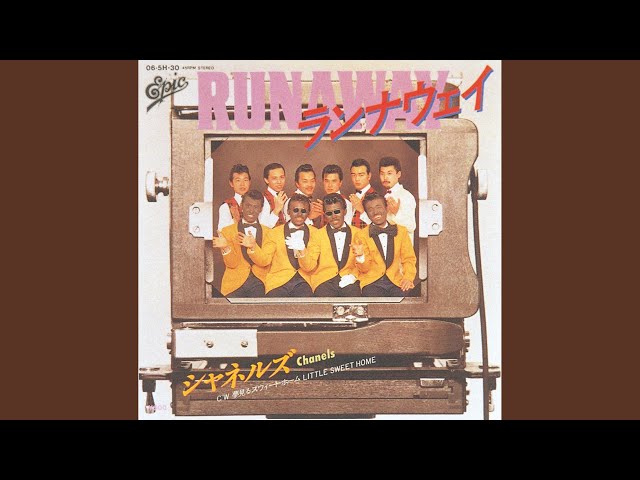
When it comes to the groups that laid the foundation for soul music and R&B in Japan, Rats & Star surely comes to mind.
As their black-coated appearance suggested, they had deep respect for Black music.
Their song “Runaway” is one of their signature tracks, blending elements of Black music with kayōkyoku and J-pop into a very singable style.
The vocal range is relatively narrow, from mid1 D# to mid2 G, so as long as you focus on the groove, you should be able to aim for a high score.
Farewell to the Days of YouthAlice

Alice, the folk group that stirred up Japan’s 1970s music scene with their distinctive musicality.
Their 10th single, “Saraba Seishun no Toki,” released in 1977, can rightly be called a masterpiece that resonates deeply with men in their 50s.
With lyrics and composition by Shinji Tanimura, the song conveys profound emotion and a strong message, depicting the end of youth and the hope of a new beginning.
A powerful sense of moving forward without looking back permeates the entire piece.
It’s also a song often performed with audience participation at live shows, so the vocal lines in every part are simple.
Give it a try.
KISS MEKyosuke Himuro

Kyosuke Himuro’s signature song “KISS ME.” It’s a rock-style track emblematic of the ’90s, featuring sharp, punchy synthesizers.
Despite that, it’s surprisingly easy to sing.
While the range is fairly wide—lowest note at mid1 C and highest at hi F—the song is primarily built around the mid2 C area, so it’s not an extremely high-pitched piece.
In fact, if you imitate Himuro’s constricted vocal style, you may find it quite manageable.
It’s a surefire hit at karaoke, so definitely consider adding it to your repertoire.