




[2025] Japanese Karaoke Songs That Men in Their 50s Get Excited About


For people in their 50s, social responsibilities tend to grow heavier, and many may be feeling stressed from everyday life at work and at home.
For those spending such demanding days, karaoke is one of the best ways to blow off steam!
Still, there are probably quite a few who think, “I’m not that familiar with songs, so I don’t know what to sing…”
In this article, we’ll introduce plenty of songs recommended by our editorial team for anyone with those concerns.
Since this is aimed at people in their 50s, we’ve selected mainly nostalgic tracks.
Why not get together with friends of the same generation once in a while and sing your heart out to songs from the good old days?
And for younger readers, feel free to use this as a reference when choosing songs for karaoke outings with your bosses in their 50s.
- [2025] Uplifting songs recommended for people in their 50s: A collection of nostalgic classics
- [50s] Karaoke Songs That Get the Crowd Going: 2025 Rankings
- Easy-to-sing karaoke songs recommended for men in their 50s
- [2025] Recommended Japanese songs for karaoke for men in their 50s
- Karaoke songs that are sure to get a 60-something man fired up
- [For men in their 40s] That nostalgic song you can enjoy at karaoke!
- [2025] Classic Karaoke Songs That Hype Up Year-End and New Year Parties
- Karaoke songs for men in their 40s: a curated selection of hit tracks women want to hear!
- [2025] Songs You Can Add Chants to at Karaoke: A Roundup of Crowd-Pleasers
- [2025] A roundup of autumn songs for people in their 50s. Showa-era classics that bring back those days
- [For Men] This song is perfect for hyping up the crowd at karaoke!
- [For Men in Their 40s] A Collection of Songs That Score High at Karaoke [2025]
- Karaoke songs that are easy to sing—even for those who aren’t confident singers—recommended for men in their 40s
[2025] Japanese Karaoke Songs That Men in Their 50s Get Excited About (71–80)
TOKIOKenji Sawada

Among the countless masterpieces by Kenji Sawada—better known as Julie—one song that stands out for its enduring popularity, boasting overwhelming play counts even in today’s subscription era, is TOKIO.
Written by Shigesato Itoi, composed by Kunihiko Kase, and arranged by Tsugutoshi Goto—an all-star team of hitmakers—TOKIO was released as a single in 1980.
Many people now in their 50s likely remember watching Sawada on TV as children, singing while wearing that red-and-white striped parachute on his back.
It may be hard to replicate Sawada’s uniquely sensual flair as he delivers this extraordinarily catchy killer tune, but if you shed your inhibitions and sing with the gusto of becoming Julie himself, you’ll practically be the star of the day!
Suddenly, SinbadSouthern All Stars

When the chorus hits, you can’t help but want to shout at the top of your lungs! Released in 1978 as Southern All Stars’ debut single, it became a hit that sold over 800,000 copies.
The typically zany lyrics, characteristic of Southern All Stars, were harshly criticized by experts at the time for being “incomprehensible” and “disregarding the beauty of the Japanese language.” However, thanks to Keisuke Kuwata stubbornly standing by the lyrics, the song has now become a karaoke staple that always hypes up the crowd.
Kuwata’s foresight is truly impressive!
Winter LightningAlice

It was Alice’s 11th single overall, released in 1977.
For Alice, it became their first hit to break into the Top 10 on the charts.
I imagine many men in their 50s first discovered Alice through popular shows of the time like TBS’s “The Best Ten.” I myself learned about Alice through this song, instantly became a big fan, and I vividly remember pretending a broom was a guitar during school cleaning time, singing and playing with friends.
I’m sure many of you had similar experiences, right? I hope it brings back memories of your nostalgic boyhood and that you all sing along and have fun together.
Musically, it’s an upbeat, really enjoyable track, so if you pick this song at karaoke, it’s sure to liven up the room!
[2025] Japanese Karaoke Songs That Get Men in Their 50s Fired Up (81–90)
MasqueradeShonentai

When people in their 50s think of a Johnny’s idol group, many would instantly name Shonentai.
Dominating the scene in the 1980s, the three members now each thrive in TV dramas, films, and stage productions.
Their signature song, of course, is their debut track Kamen Butokai (Masked Ball), which topped the Oricon charts.
Composed by the Shōwa-era master Kyōhei Tsutsumi, its lyrics were written by Tetsuya Chiaki—an assignment realized at the request of Kazukiyo Nishikiori, a big fan of Eikichi Yazawa, for whom Chiaki penned many songs.
Frequently covered by their Johnny’s juniors, the song has reached younger generations and can rightly be called a classic of Shōwa-era pop.
It’s a staple hit at karaoke gatherings of people in their 50s, and performing it in front of younger colleagues might just get the crowd going!
Romantic FlightKome Kome Club

This is the 10th single by Kome Kome Club, a band that took the era by storm with their lavish, big-band sound and flashy live performances.
It became a single after being featured as a commercial image song, and it’s well known as one of Kome Kome Club’s signature tracks.
Many artists still cover it today, so it’s recognized across generations and is a great pick for karaoke, especially for those in their 50s.
The overall key is low, making it easy to tackle, and it’s guaranteed to get the crowd going.
Linda LindaTHE BLUE HEARTS
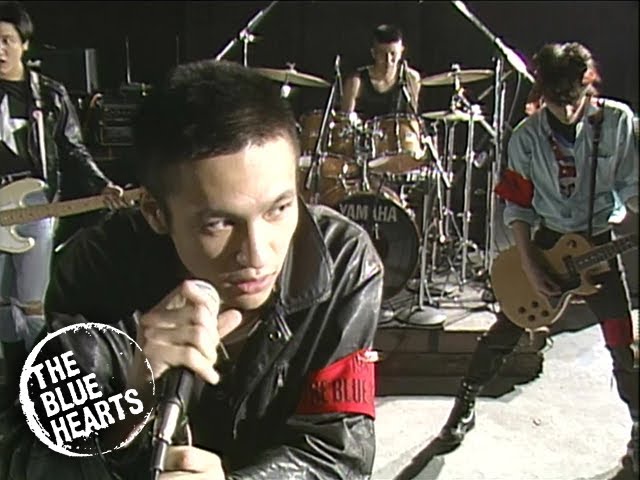
This is one of the signature songs of THE BLUE HEARTS, the legendary punk rock band that helped spearhead the band boom.
It was their major-label debut single and is a historic track that has even been used as material for musicals and films.
Its big appeal lies in the simple, straightforward sound and vocals, and the powerful message conveyed through the lyrics.
It’s a song where energy and emotion matter more than singing it beautifully, so even if it’s a bit rough around the edges at karaoke, it’s one you’ll want to belt out with all your might.
Recommendation for Adultsanger so intense that one's hair stands on end; furious

It’s a powerful and lively song by Dohatsuten that seems to teach us what it means to be an adult.
The light, rock ’n’ roll-inspired rhythm conveys a sense of exhilaration and fun.
While nostalgic for the childhood days when we wished we didn’t have to grow up, it also captures the joy that can only be felt after becoming an adult, giving the piece a positive, hopeful tone.
Rather than dwelling on the past, it feels like an encouraging message to look forward and think about the fun things yet to come.