




[2025] Japanese Karaoke Songs That Men in Their 50s Get Excited About


For people in their 50s, social responsibilities tend to grow heavier, and many may be feeling stressed from everyday life at work and at home.
For those spending such demanding days, karaoke is one of the best ways to blow off steam!
Still, there are probably quite a few who think, “I’m not that familiar with songs, so I don’t know what to sing…”
In this article, we’ll introduce plenty of songs recommended by our editorial team for anyone with those concerns.
Since this is aimed at people in their 50s, we’ve selected mainly nostalgic tracks.
Why not get together with friends of the same generation once in a while and sing your heart out to songs from the good old days?
And for younger readers, feel free to use this as a reference when choosing songs for karaoke outings with your bosses in their 50s.
- [2025] Uplifting songs recommended for people in their 50s: A collection of nostalgic classics
- [50s] Karaoke Songs That Get the Crowd Going: 2025 Rankings
- Easy-to-sing karaoke songs recommended for men in their 50s
- [2025] Recommended Japanese songs for karaoke for men in their 50s
- Karaoke songs that are sure to get a 60-something man fired up
- [For men in their 40s] That nostalgic song you can enjoy at karaoke!
- [2025] Classic Karaoke Songs That Hype Up Year-End and New Year Parties
- Karaoke songs for men in their 40s: a curated selection of hit tracks women want to hear!
- [2025] Songs You Can Add Chants to at Karaoke: A Roundup of Crowd-Pleasers
- [For Men] This song is perfect for hyping up the crowd at karaoke!
- [For Men in Their 40s] A Collection of Songs That Score High at Karaoke [2025]
- Karaoke songs that are easy to sing—even for those who aren’t confident singers—recommended for men in their 40s
- Perfect for karaoke or background music! Energetic songs recommended for men of the Yutori generation
[2025] Japanese karaoke songs that get men in their 50s pumped up (31–40)
countrysideKoji Tamaki

Here is one of Koji Tamaki’s signature songs.
Released in 1996, it was used as the theme song for Fuji TV’s Thursday Theater drama “Coach.” The lyrics, which capture a period of personal struggle he himself experienced, resonate deeply with listeners.
The dynamic contrast is also excellent: the verses are packed with detailed lyrics, then the chorus opens up into a smoother, more liberated rhythm.
Keep that contrast firmly in mind as you sing!
BoyhoodYosui Inoue

The timeless classic “Shonen Jidai,” beloved across generations, is a song released by Yosui Inoue in 1990 as the theme for a film of the same name.
Commissioned directly by Fujiko Fujio A, the author of the original work, “Shonen Jidai” features a simple yet moving piano tone, along with a melody and lyrics that evoke a deep sense of Japanese nostalgia.
It’s truly remarkable, and its fame and popularity are such that it would be no exaggeration to call it a national song—indeed, it has even been included in junior high and high school music textbooks.
For those in their 50s as of 2023, 1990 would have been their late teens to twenties.
True to its title, it’s a song you’ll want to sing while recalling your own boyhood days—perhaps at a gathering with your elementary or junior high school classmates.
Music HourPorno Graffitti

The two-member rock band PornoGraffitti quickly drew attention when their major-label debut single “Apollo” became an unexpected hit.
Their third single, “Music Hour,” which was used in Otsuka Pharmaceutical’s Pocari Sweat commercial, remains a staple in their live shows to this day.
With its catchy melody and comical lyrics, it’s sure to liven up any karaoke session no matter who you’re with.
It’s especially recommended for men in their 50s, who are the band’s generation, but since the key is high, be sure to adjust it to suit your voice.
Do whatever the hell you want.Kenji Sawada

A singer known by the nickname “Julie,” Kenji Sawada made his solo debut after his work with The Tigers and PYG, and this is his 19th single.
With wistful lyrics and melody and a cool, 8-beat rock flavor, it’s recognized as one of his signature songs.
For men in their fifties who likely spent their youth around the time of its release, it’s a number that’s both easy to sing and sure to be a hit at karaoke.
It’s a rock tune that stirs up nostalgia—one you’ll want to sing while tossing your hat as part of the performance.
There's always tomorrowRe:Japan
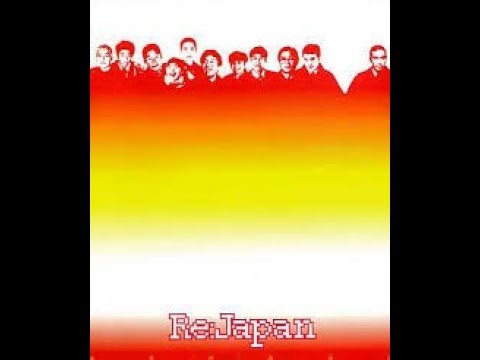
This is a song by Re:Japan, a music unit made up of 11 comedians from Yoshimoto Kogyo.
It’s structured by adding new lyrics to the original ones by Kyu Sakamoto.
The song was the theme for the drama “Ashita ga Aru Sa,” and because many Yoshimoto Kogyo talents, including Downtown’s Masatoshi Hamada, appeared in the series, both the drama and the song drew attention at the same time.
The lyrics feel like snapshots of youthful moments, and the use of nostalgic words is also striking.
Even when things go wrong in everyday life, it’s a positive song that gives you hope to move toward the next day.
[2025] Japanese Pop Karaoke Songs That Get Men in Their 50s Fired Up (41–50)
Heartbroken over JuliaThe Checkers

Released in November 1984, this song is The Checkers’ fifth single.
Its lyrics vividly portray the pain of heartbreak, and Fumiya Fujii’s passionate vocals strike a chord.
It’s filled with emotions everyone has felt—lingering attachment to a former lover, regret, and sorrow.
Sing it at karaoke and you’ll surely recall the passions of your youth.
It’s a perfect track for blowing off steam—give it a try!
everybody goesMr.Children

No matter which early Mr.
Children song you pick, it’s sure to get everyone pumped.
If I had to narrow it down to just one, I’d hesitate—but when in doubt, I think this is the one.
The slightly ironic, laid-back lyrics don’t feel like they’re trying too hard to impress by singing them perfectly, and that’s what I like about it.